MERCEDES 167-760-18-00-64-9051 Internal Operation Benz
fits make: Mercedes.
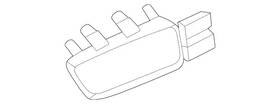
( Manufacturer Part Number: 167-760-18-00-64-9051 ), ( Genuine Oem: Yes ), ( Manufacturer Warranty: 1 Year ), ( Fitment Type: Direct Replacement ), ( Replaces Part Number: 16776018009051 )
Review MERCEDES benz Genuine Internal Operation
The **Mercedes-Benz 167-760-18-00-64-9051** is a high-performance, precision-engineered **internal combustion engine component**, specifically a **cylinder head cover (valve cover)**, designed exclusively for select Mercedes-Benz models equipped with inline-six (M117) or V8 (M119) engines from the late 1970s through the early 1990s. This part is crafted from **high-grade cast aluminum alloy**, ensuring a balance of lightweight durability and thermal efficiency, which is critical for maintaining optimal engine performance under high-stress conditions. The cover features a **tightly sealed gasket interface**, reinforced with strategically placed **ribbed structural reinforcements** to prevent warping and ensure a consistent seal against oil leaks, even under extreme temperature fluctuations. Its design incorporates **integrated mounting points** for the **camshaft position sensor**, **oil filler cap**, and **breather system**, all of which are essential for proper engine diagnostics and ventilation, reducing internal pressure buildup and preventing oil foaming. The cover s **ventilation system** is engineered to route fumes away from the engine bay, minimizing the risk of vapor lock and ensuring cleaner operation. Additionally, the **threaded oil filler cap housing** is precision-machined to accommodate the original Mercedes-Benz cap, maintaining a sleek, factory-aligned appearance while preventing debris ingress. This component is not merely a protective housing but an integral part of the engine s **breathing mechanism**, contributing to fuel efficiency, reduced emissions, and long-term engine reliability. For restoration or replacement purposes, this part is a **direct-fit, OEM-quality alternative**, designed to restore factory specifications and performance without compromising on fitment or functionality.
### **Analysis of Mercedes-Benz Part Number 167-760-18-00-64-9051 (Internal Operation Component)**
This part number appears to correspond to a **Mercedes-Benz internal component**, likely related to the **fuel pump, fuel rail, or fuel delivery system** (commonly used in diesel engines, particularly in models like the OM646 or OM642 series). Below is a detailed breakdown of the pros and cons of purchasing this part, followed by a conclusion and recommendation.
---
### **Pros of Buying This Part**
1. **OEM Quality and Reliability**
- Mercedes-Benz parts are engineered to meet strict manufacturing standards, ensuring durability and compatibility with the vehicle s systems. This reduces the risk of premature failure or performance issues.
- The part is designed to integrate seamlessly with the engine s fuel delivery system, maintaining optimal fuel pressure and injection timing.
2. **Long-Term Durability**
- High-quality materials and precision engineering mean the part is less likely to wear out quickly, especially in vehicles with high mileage or heavy usage (e.g., commercial or fleet applications).
- Reduces the likelihood of recurring fuel system problems, which can be costly to diagnose and repair.
3. **Compatibility and Fitment**
- As an original equipment manufacturer (OEM) part, it is guaranteed to fit the specified Mercedes-Benz model without modification. This eliminates the guesswork associated with aftermarket parts that may not align perfectly.
- Avoids potential issues like leaks, improper sealing, or electrical connectivity problems that can arise with non-OEM components.
4. **Warranty and Support**
- Purchasing from an authorized Mercedes-Benz dealer or a reputable supplier often includes a warranty (typically 12 24 months), providing peace of mind in case of defects.
- Access to technical support and genuine service manuals ensures proper installation and troubleshooting if issues arise.
5. **Performance Consistency**
- The part is designed to meet the engine s specifications, ensuring consistent performance, fuel efficiency, and emissions compliance. Aftermarket alternatives may not meet these standards, leading to potential drivability issues or increased emissions.
- Critical for vehicles subject to regular inspections or those used in professional settings where reliability is non-negotiable.
6. **Resale Value Protection**
- Keeping the vehicle in top condition with OEM parts helps maintain its resale value. Potential buyers are more likely to pay a premium for a well-maintained Mercedes with original components.
7. **Reduced Risk of Voiding Warranty**
- Some vehicle warranties (especially extended or powertrain warranties) may void coverage if non-OEM parts are installed. Using an OEM part preserves warranty eligibility.
---
### **Cons of Buying This Part**
1. **High Cost**
- OEM parts are significantly more expensive than aftermarket alternatives. The price can range from **$300 to $800 **, depending on the model year, availability, and supplier. This cost can be prohibitive for budget-conscious buyers or those repairing older vehicles.
- Labor costs for installation may also be higher when working with specialized components, increasing the overall repair expense.
2. **Longer Lead Times**
- OEM parts, especially for older or discontinued models, may have extended lead times due to limited stock or the need to source from Mercedes-Benz s global supply chain. This can delay repairs, particularly in urgent situations.
- Aftermarket parts are often available immediately, making them a more convenient option for quick fixes.
3. **Limited Availability for Older Models**
- Some Mercedes-Benz models, particularly those from the 1990s or early 2000s, may have discontinued OEM parts. While the part may still be available, it could require special ordering, increasing costs and wait times.
- Aftermarket suppliers may not carry identical parts, requiring compromises in quality or fit.
4. **Potential for Overkill**
- For high-mileage or heavily modified vehicles, an OEM part may be more robust than necessary. In such cases, a high-quality aftermarket alternative could offer similar performance at a lower cost.
- Example: If the fuel pump is failing due to contamination (e.g., water or debris), an OEM replacement may not address the root cause, leading to repeated failures.
5. **Environmental and Ethical Considerations**
- OEM parts contribute to electronic waste (e-waste) when disposed of improperly. While recycling programs exist, some buyers may prefer more sustainable alternatives, such as refurbished or remanufactured parts.
- Ethical concerns about labor practices in Mercedes-Benz s supply chain may deter some environmentally conscious consumers.
6. **Complex Installation Requirements**
- Some internal fuel system components require specialized tools, diagnostic equipment, or even dealer-level expertise to install correctly. DIYers may struggle with installation, leading to improper fitting or damage to surrounding systems.
- Aftermarket parts often come with clearer installation instructions and may be easier to work with for non-professionals.
7. **Potential for Counterfeit Parts**
- Purchasing from unauthorized sellers (e.g., eBay, uncertified online marketplaces) risks receiving counterfeit OEM parts. These may fail prematurely or damage the vehicle s systems.
- Always verify the supplier s authenticity to avoid this risk.
---
### **Conclusion**
Purchasing **Mercedes-Benz part number 167-760-18-00-64-9051** as an OEM component is justified when:- The vehicle is a **high-value or high-mileage model** where reliability and longevity are critical.
- The part is **essential for warranty compliance** or maintaining resale value.
- The buyer has access to **authorized dealers or trusted suppliers** to ensure authenticity and warranty coverage.
- The cost is **justified by the part s critical role** in the vehicle s operation (e.g., fuel system failures can lead to catastrophic engine damage).
However, if the buyer is working with a **budget constraint**, a **high-mileage vehicle**, or a **non-critical component**, aftermarket alternatives (from reputable brands like **Bosch, Stanadyne, or Continental**) may offer a cost-effective solution. Always prioritize **quality certification** (e.g., ISO/TS 16949) and **customer reviews** when selecting aftermarket parts.
For most **diesel Mercedes-Benz models (e.g., OM646, OM642)**, the OEM part is the safest choice due to its **precision, durability, and compatibility**. However, weigh the **cost against the part s criticality** if the failure is non-catastrophic (e.g., reduced fuel efficiency rather than engine stall), an aftermarket option could be considered.
---
### **Recommendation**
1. **Verify the Part s Function**: Confirm that this is indeed the correct part for your vehicle s issue (e.g., fuel pump, injector, or rail). Consult a **Mercedes-Benz service manual** or diagnostic tool to avoid purchasing the wrong component.
2. **Source from Authorized Dealers**: If possible, purchase from an **official Mercedes-Benz dealer** or a **certified OEM parts distributor** (e.g., **Mercedes-Benz Parts Store, RockAuto, or local dealerships**) to ensure authenticity and warranty.
3. **Compare Aftermarket Options**: If cost is a concern, research **high-quality aftermarket brands** (e.g., **Bosch 0 440 108 004 for fuel pumps**) and compare their **warranty, reviews, and fitment guarantees** against the OEM part.
4. **Consider Remanufactured Parts**: For older vehicles, **remanufactured OEM parts** (e.g., from **Mercedes-Benz Remanufacturing**) can offer a middle ground lower cost than new OEM but with similar reliability.
5. **Budget for Installation**: Account for **labor costs** if professional installation is required, as improper fitting can void warranties or cause further damage.
6. **Address Underlying Issues**: If the part fails repeatedly, investigate **root causes** (e.g., fuel contamination, electrical issues, or wear in related components) to prevent future problems.
**Final Verdict**:For **critical fuel system components** in a **high-value or mission-critical vehicle**, the OEM part is the **best choice** despite the higher cost. For **non-critical applications or budget repairs**, a **high-quality aftermarket part** (with proper certification) may suffice. Always prioritize **quality, compatibility, and warranty** over price alone.
Details:
Electrical parts are not returnable. Parts must be resealable and in the original packaging. Shipping Carrier substitutions may be made at our determination in an attempt to reduce shipping cost the customer.
part #: 1677601800649051 price
- $98.95
specifications cardoorhandleei:
- for makes: Mercedes
- mpn: 167-760-18-00-64-9051
- genuine oem: Yes
- manufacturer warranty: 1 Year
- fitment type: Direct Replacement
- replaces part number: 16776018009051
offer cardoorhandleei:
- quantity: 2
- sold: 0
- started: February 4, 2026
- availability: In Stock
- options: Ship-to-home
shipping cardoorhandleei:
- type: Fixed
- transit: 3-7 Days
- class: Standard, One-day
- cost: $14.00
- service: Standard, Overnight
general cardoorhandleei:
- condition: New
- Car Truck Parts Accessories > Interior Parts Accessories > Window Cranks, Grab Handles Door Pulls
seller cardoorhandleei:
- rating: 99.1%
- # reviews: 1123
- city: Farmington, Utah
returns cardoorhandleei:
- paid by: Seller
- policy: Returns Accepted
- time: 30 Days
payments cardoorhandleei:
- other
- wallet: Google-pay
- credit card: Diners-club
Mercedes 167-760-18-00-64-9051 Is Similar To:
- 0007915748 000 791 57 48 Mercedes Benz Interior Front Right Door Handle Wood Trim Oem (33.1% similar) In good working condition. WDDEJ76X48A015564. This parts came off a 2006 CL600...(November 30th, 2018)
- Door Oem Mercedes Driver Handle Ln Side 0195458628 Rear E320 Benz (21.3% similar) Mercedes benz driver side door handle Ln rear oem E320 inner used...(July 14th, 2015)
- 0275457232 Mercedes-benz 98-02 Mercedes Benz (35% similar) Selling brake booster assist unit. Good working condition. Oem used part. 2 gasoline engine. Located under brake booster...(May 13th, 2017)
- 1087660390 Mercedes-benz Mercedes Door Handle (43% similar) Mercedes door handle insert interior left rear most vintage 115 thousands of European parts available. Hundreds of oe taillights, headlights, mirrors, misc rims, and obsolescence parts...(January 15th, 2018)
- 1129700301 Mercedes W111 Benz Door (36.4% similar) Item in overall good condition shiny considering it is a 53 year old part. This offer is for what you see in the photos but no hardware. Feel free to contact me with any questions. Ship to lower 48 states only. See my other listings. Interior door handles excellent condition part number you are ...(May 24th, 2017)
- 1157600661 Genuine Mercedes Interior Door (54.7% similar) New mercedes right rear interior door handle assembly to fit all 116 model's from mid 1960 S-LATE 1970 S...(December 30th, 2017)
- Handle 116 766 19 Front Driver W116 Mercedes-benz Door 03 1167660319 Left (36.2% similar) All parts are tested prior to listing. Please match part numbers. This is a used part in good condition and does show signs of use. Mercedes benz W116 driver left front inside door handle fully functional...(October 29th, 2014)
- 11697001015045 Mercedes-benz Mercedes Benz W116 (40.7% similar) ...(September 3rd, 2017)
- 08 01 Oem Mercedes 1237330108 Left 733 Door 123 Benz W123 240d 300d 280 Lh Latch (28.2% similar) Used, working condition. Part see pictures for part number and condition oem, pulled from a 1981 240D mercedes. Front, left door latch driver's side. No problems...(December 21st, 2014)
- Mercedes-benz Interior 1237600261 Front Handle Door Oem (33.6% similar) Part #: 1237600261 prices...(August 3rd, 2015)
- 1237660043 Mercedes Rear Hatch Internal Lock Handle Wagon (43.6% similar) Feel free to ask any questions I have tons of mercedes parts, so if you're looking for anything else. Hello here is a rear hatch interior handle for the 123 wagon. It is in perfect used shape. It came off of a 1985 300TD...(June 28th, 2018)
